
Matcha vs. Yerba Mate - Comparison of Effects, Caffeine, and Taste
Matcha and yerba mate often appear side by side. Both drinks are chosen by people looking for a boost but not always wanting to reach for coffee. Both have their own ritual and a long history. Yet, they work differently. They are prepared differently. They taste different. They leave a different feeling after a few sips. If you're wondering which drink is better suited for your morning, work, or a calm moment during the day, it's worth taking a closer look at them.
What is the difference between matcha and yerba mate?
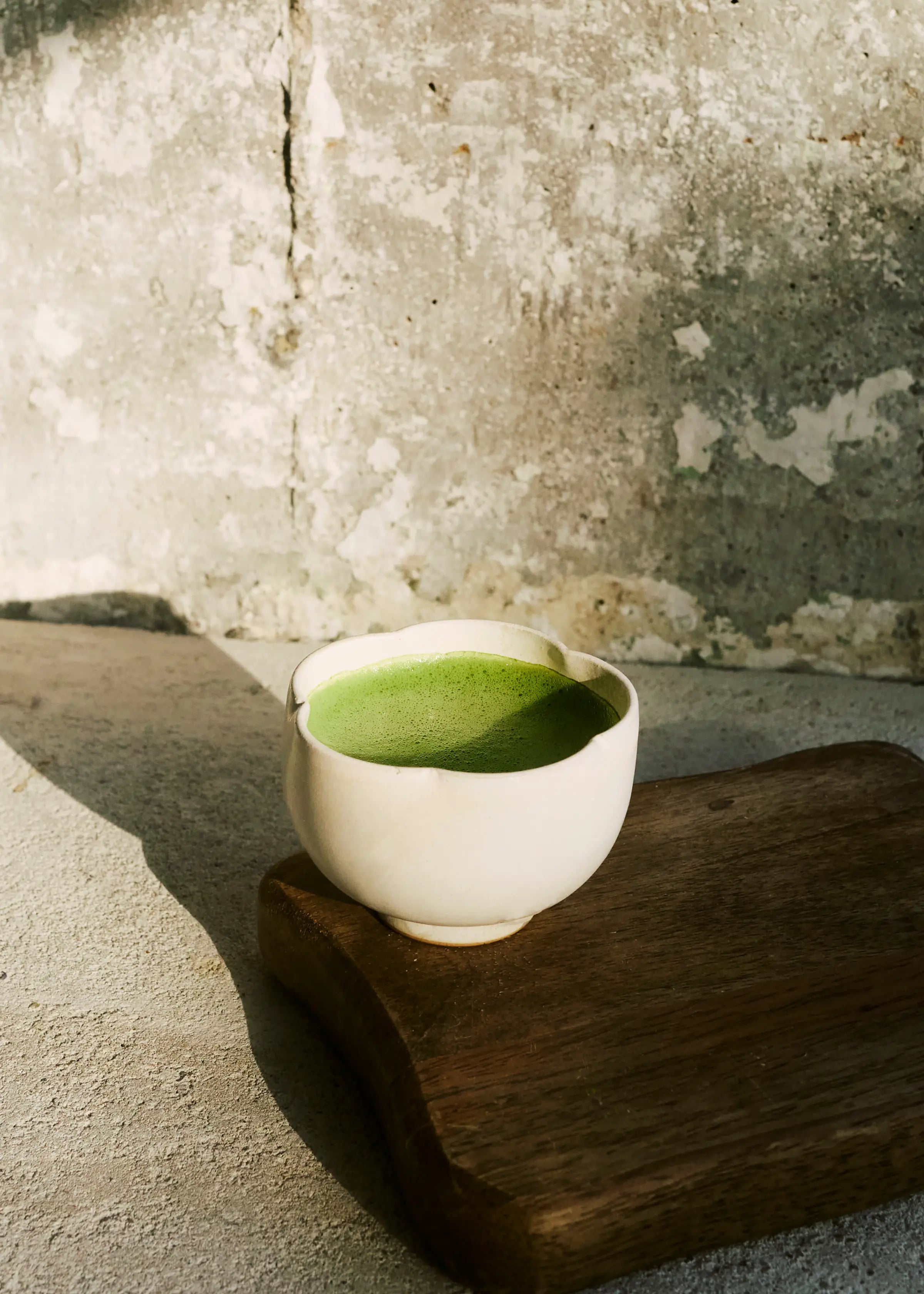
Matcha is powdered green tea from Japan. It is not an infusion of leaves that are removed from the vessel after a few minutes. Here, we drink the entire leaf, very finely ground and mixed with water. That is why matcha has an intense color, smooth texture, and a deeper flavor than classic green tea. In good quality powder, you can taste freshness, delicate sweetness, umami, and a leafy softness.
Yerba mate comes from South America and is made from the leaves of the Paraguayan holly. It is most often prepared in a matero and drunk through a bombilla. The dried leaves are steeped in water, sometimes several times, gradually extracting their flavor and stimulating ingredients. It is a more herbal, earthy, often distinctly bitter drink.
The effects of matcha and yerba mate – calm energy or stronger stimulation?
Yerba mate is associated with quick stimulation. It can provide a clear energy boost, especially when prepared with a large amount of dried leaves. However, not everyone finds this form suitable. For some people, yerba can cause a feeling of tension or acceleration, especially when drunk strong and frequently.
Matcha works differently. It also contains caffeine, but its stimulating effect is often perceived as milder and more even. The L-theanine present in green tea, which is often associated with calmness and focus, plays a significant role. Therefore, matcha is well-suited for work, study, a calm morning, or a moment when you want to be present but not overstimulated.
It's not that one drink is better for everyone. It's more about pace. Yerba mate can resemble a quick step. Japanese matcha is more like a steady breath. It stimulates, but doesn't necessarily disrupt your own rhythm.
Caffeine in matcha and yerba mate – what can you expect?
The amount of caffeine depends on the serving, product quality, water temperature, and preparation method. In yerba mate, the differences can be very significant, as one person may use a small amount of dried leaves, while another may fill most of the vessel. Traditionally, yerba is steeped multiple times, so the stimulation can be extended over time.
In matcha, the serving is usually easier to control. Approximately 3 grams of powder per bowl is most commonly used. If you prepare matcha with water, the taste will be cleaner and more vegetal. If you make a matcha latte, the drink becomes milder, creamy, and more comforting. In both versions, you are still drinking the ground leaf, not just the infusion. Traditional matcha sets will facilitate its preparation and bring out the best flavor.
For people who want to limit sharp energy spikes, matcha is often a more convenient choice. It's easy to prepare in smaller portions. It's easy to adjust the intensity. It's also easy to incorporate into daily life without a complicated ritual.
How does matcha taste, and how does yerba mate taste?
