

Chinese vs. Japanese matcha? What are the differences and which one to choose?
The world of matcha can seem complicated for someone just starting out. One of the key market distinctions you'll encounter early on is the country of origin of the leaves. Two main origins dominate shelves and online stores: traditional Japanese matcha and the rapidly developing Chinese matcha. The differences between them affect the color, aroma, sensory profile, and, most importantly, your experience during your morning ceremony.
Table of Contents:
-
Where does authentic matcha come from? A brief history of the green powder
-
Cultivation and processing method – Chinese vs. Japanese matcha
-
Color and texture, or what you see when you open the matcha tin
-
Chinese vs. Japanese matcha – which one should you ultimately choose?
Where does authentic matcha come from? A brief history of the green powder
Today, Japan is the absolute capital and synonym for the highest quality matcha. However, the technique of powdering tea leaves itself originated in China, during the Tang and Song dynasties (7th–13th century). It was there that Buddhist monks discovered that finely ground leaves steeped in hot water perfectly supported long hours of meditation, bringing mental clarity and peace.
This tradition arrived in Japan in the 12th century thanks to the monk Eisai. And while in China, this method was eventually abandoned in favor of steeping whole leaves, the Japanese elevated the powdered tea production process to the level of a national art, creating the intricate ritual of Chanoyu. This is why today, Japanese matcha is considered the global standard of quality. Currently, China has returned to matcha production, responding to global demand. However, their approach is based on completely different technological and philosophical foundations than Japanese craftsmanship.
Cultivation and processing method – Chinese vs. Japanese matcha
Japanese matcha owes its unique character to the shading process of its plantations for approximately 3–4 weeks before harvest. Special mats block up to 90% of sunlight. The tea bushes, striving for survival, produce enormous amounts of chlorophyll and amino acids, especially L-theanine. After harvesting, the leaves are immediately steamed (the steaming method), which stops oxidation, preserves their vibrant green color, and locks in a fresh, grassy aroma.
In China, this process is different. Although the most expensive plantations also experiment with shading, most Chinese matcha grows in full sun. Crucially, instead of steaming, the leaves are most often dry-heated – by roasting in special drums or large pans (the pan-firing method). This is a traditional Chinese method of processing green tea, which gives it a completely different aromatic profile, but destroys the delicate, subtle notes for which traditional Japanese brew is famous.
Color and texture, or what you see when you open the matcha tin
The eye doesn't lie. The difference between Chinese and Japanese matcha is visible even before pouring water over the powder.
-
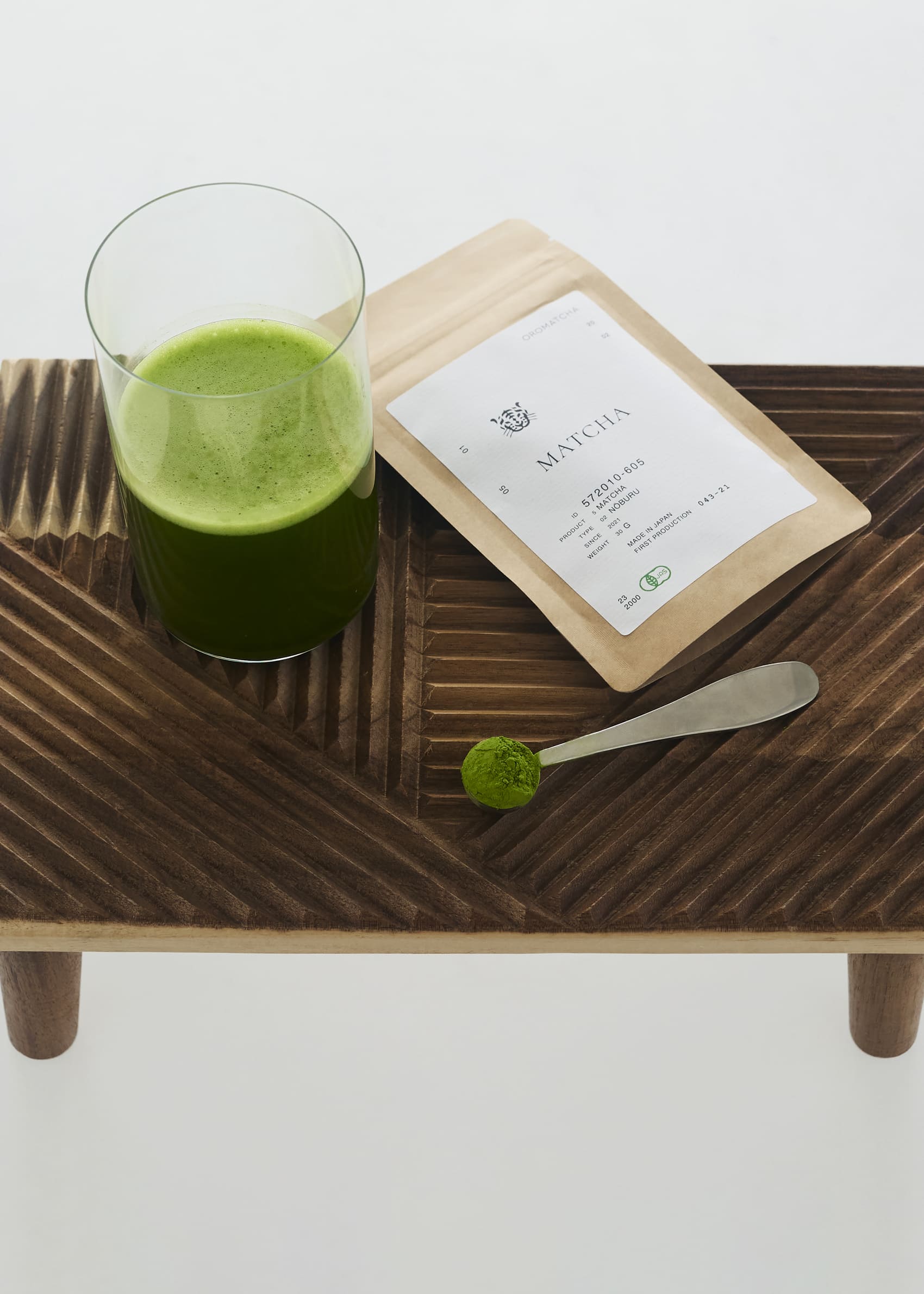
High-qualityJapanese matcha (traditional or ceremonial grade) boasts a captivating color. It is bright, intensely green. Its hue resembles young moss or vibrant grass on a May morning. Its texture is as smooth as silk or luxurious cosmetic powder. This is because in Japan, after removing stems and veins (calledtencha), the leaves are slowly ground in traditional granite mills.
-
Chinese matcha most often takes on muted colors – from olive, through military green, to yellowish and brownish shades. This is a direct result of roasting the leaves and lower chlorophyll content. In touch and structure, it can be more sandy, dusty, and grainy, as metal blade machines are used for grinding, which generate heat, further oxidizing the product during processing.
Flavor profile: vegetal umami versus earthy bitterness
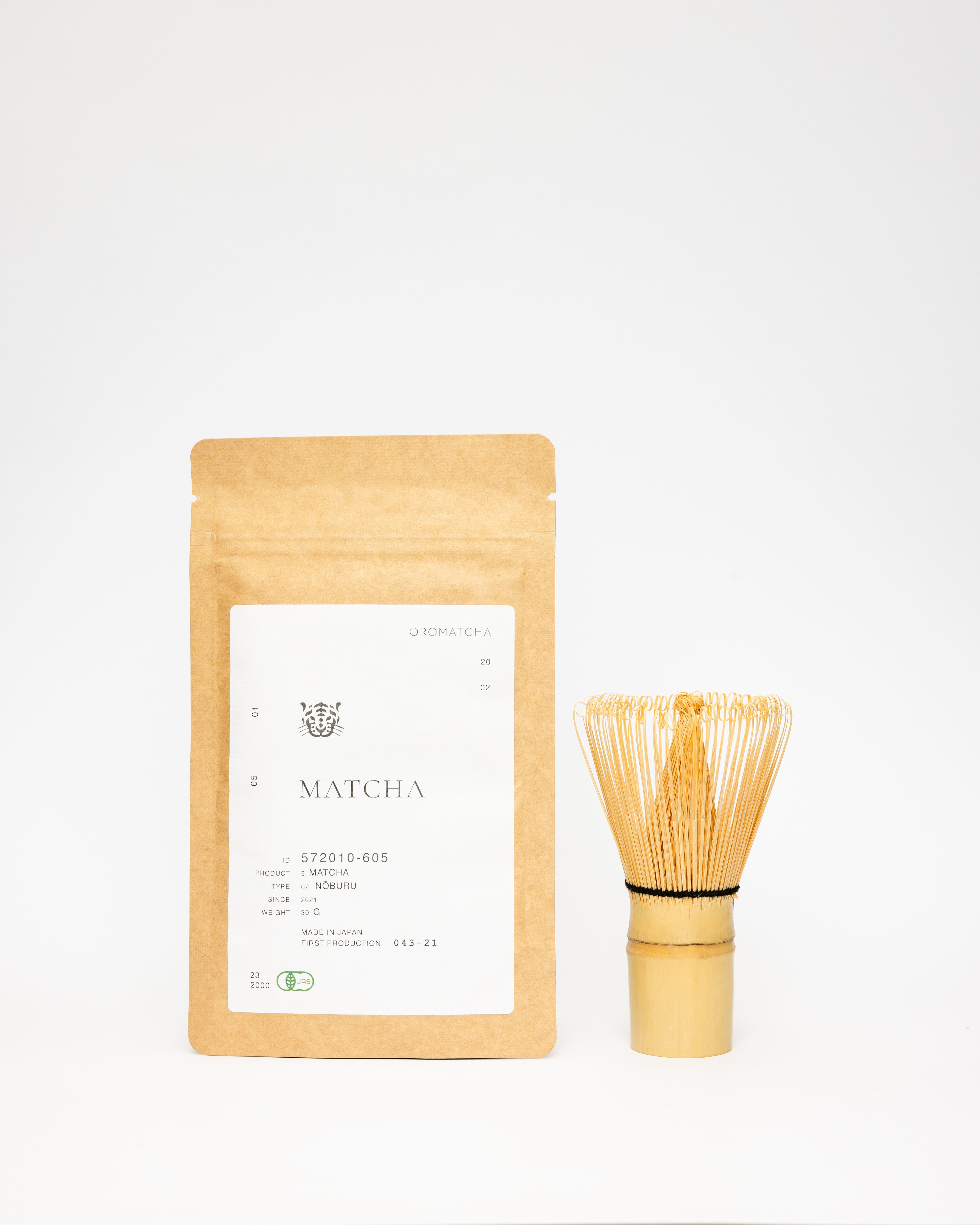
Matcha accessories and the preparation method are not insignificant. It's worth reading more about how to make matcha at home to bring out its flavor. Because the taste of good Japanese matcha unfolds slowly and harmoniously. Initially, you'll detect a vegetal freshness, reminiscent of young sugar snap peas or grass. Then a delicate, natural sweetness emerges, followed by a deep, enveloping umami that leaves a long, velvety aftertaste on the tongue. Bitterness here is a subtle background, not a dominant accent. Traditional matcha sets will help achieve exactly this effect.
Matcha from China is characterized by a much stronger, flatter profile. Due to the roasting process, earthy, hay-like, and sometimes slightly smoky or nutty notes dominate. The lack of intensive shading means it contains less L-theanine (responsible for sweetness and umami) and more tannins. The result? The taste can be astringent, and it is sometimes difficult to find the creaminess and balance characteristic of Japanese leaves.
Chinese vs. Japanese matcha – which one should you ultimately choose?
The answer to this question depends on what role matcha is to play in your life and how you plan to drink it.
-
Choose Japanese matcha if:
-
You want to drink matcha exclusively in its pure form, prepared with water (as Usucha).
-
You are looking for calm, depth, natural sweetness, and a velvety foam in this ritual.
-
You value uncompromising quality, craftsmanship, and authenticity.
-
You want to experience the true effects of L-theanine – balanced energy and complete focus.
-
-
Choose Chinese matcha if:
-
You use it mainly as a base for intense, sweet drinks, green smoothies, or homemade baked goods (e.g., matcha cheesecakes, ice cream).
-
Strong bitterness and an earthy profile are not an obstacle for you because you plan to use a lot of honey or flavored syrups anyway.
-
You are looking for an economical solution for kitchen experiments (look for matcha under the name culinary matcha).
-
Your conscious choice – summary
Starting with matcha should be an honest experience. If your first cup is prepared from low-quality powder, too astringent and flat, it's easy to conclude that all matcha tastes that way. And that's a mistake that can discourage you for years. High quality allows you to more easily perceive what is most beautiful in this green brew: calm, pure aroma, and natural creaminess. Therefore, when seeking balance and an authentic experience, it is worth looking towards traditional Japanese cultivation.
Read more

Although they come from the same plant, they are worlds apart in your cup! Why does matcha have such an intense color and unique umami flavor, while classic green tea can be astringent? Disco...

It catches the eye in photos. It promises peace, concentration, and pure energy. Yet, when you decide to buy your first tin, you wonder why matcha is expensive. Do you know this feeling? If so, rea...